
Texting rarely comes with instructions. A single word, symbol, or punctuation mark can carry completely different meanings depending on who sent it, the platform, and the tone of the conversation. This confusion is exactly why so many people search “what does this mean in text.”
This guide breaks down how to actually read text messages, including tricky symbols like “…” and “>>>”, so you can understand what people really mean instead of guessing.
What Does “Mean in Text” Mean?
When people ask “what does this mean in text,” they are usually trying to decode a word, abbreviation, symbol, or punctuation mark that feels unclear or ambiguous in a message. Texting strips away tone of voice and facial expression, so meaning often has to be inferred from context alone.
This is why the same word or symbol can feel completely different depending on who sends it and how the conversation has been going up to that point.
What Does This Symbol Mean
Symbols in texting, like periods, ellipses, or arrows, often carry emotional or tonal weight beyond their literal function. A period at the end of a short reply can feel blunt, while an ellipsis can suggest hesitation or unfinished thoughts. Understanding these symbols requires looking at the full conversation, not just the symbol itself.
Meaning in Chat From a Guy to a Girl
When a guy sends an ambiguous message to a girl, meaning is usually shaped by the existing relationship and prior conversation tone. The same word or symbol can read as playful, distant, or serious depending on context, making it important to consider the full exchange rather than a single message alone.
The Most Common Meanings of “Mean in Text”
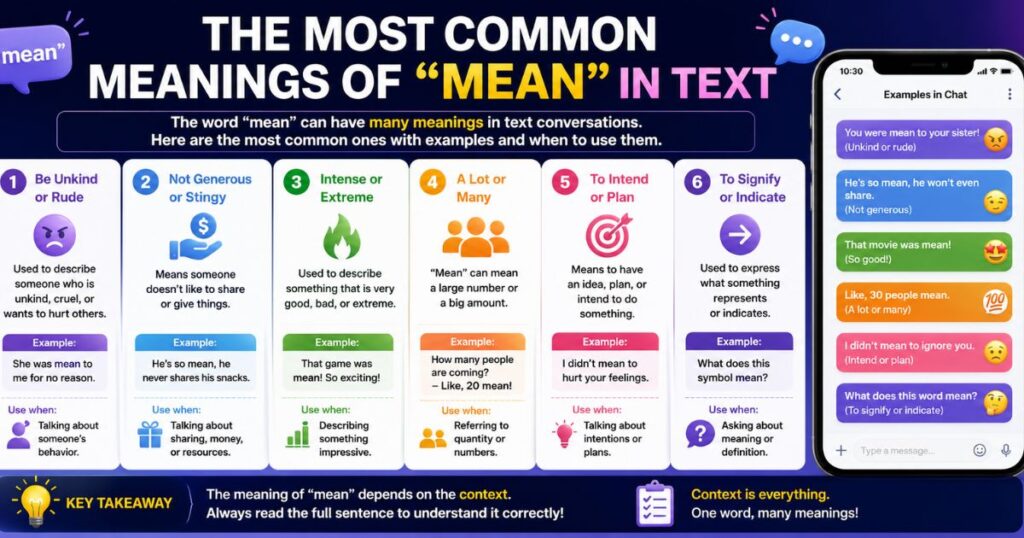
Literal Meaning
The straightforward, dictionary-level meaning of the words used, without added tone or subtext.
Slang Meaning
A meaning shaped by internet culture, where common words are repurposed to represent something different from their literal definition.
Emotional Meaning
The underlying feeling behind a message, such as excitement, sadness, or frustration, often revealed through word choice and punctuation.
Sarcastic Meaning
A message that says one thing but implies the opposite, usually identified through context or exaggerated phrasing.
Flirty Meaning
Playful or romantic undertones added to an otherwise ordinary message.
Hidden Meaning
A deeper or unspoken implication behind a message that isn’t stated outright.
What Does “…” Mean in Text Reply
An ellipsis in a text reply often signals hesitation, a pause in thought, or an unfinished feeling. Depending on context, it can suggest the sender is thinking, unsure how to respond, or intentionally leaving something unsaid.
What Does “…” Really Mean in Text (Urban Dictionary)
According to general usage across informal slang references, “…” typically conveys awkward silence, uncertainty, or a dramatic pause. It rarely has one fixed meaning and is almost always interpreted through tone and context.
How “Mean in Text” Is Used in Real Conversations
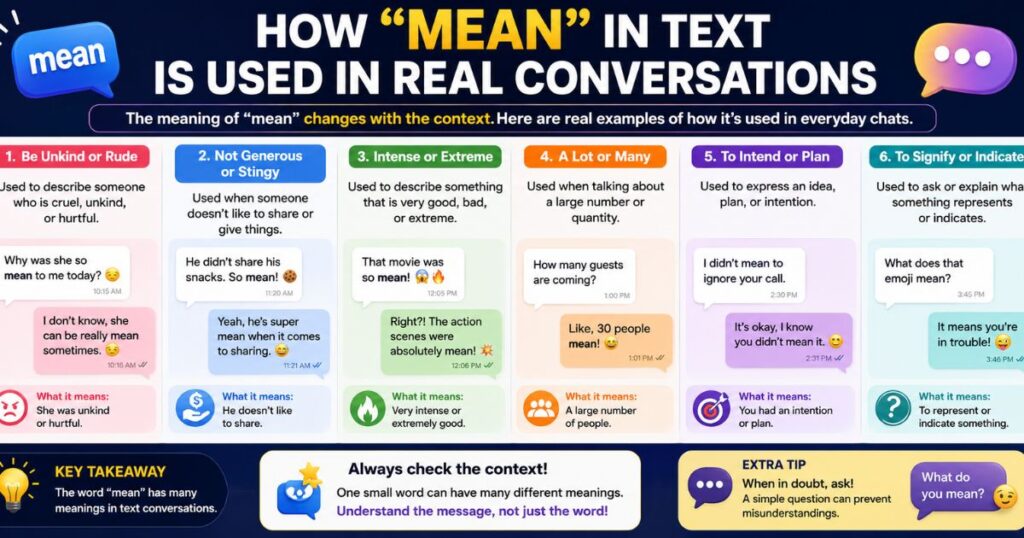
Friends & Casual Texting
Between friends, meaning is usually easy to interpret because of shared history and inside jokes, reducing the chance of confusion.
Instagram & Snapchat
On these platforms, symbols and short replies are common, and meaning often depends on emojis, punctuation, or timing paired with the message.
Dating Apps
Ambiguous texts are especially common in dating conversations, where tone can feel harder to read due to limited context between two new people.
Gaming & Online Communities
In gaming chats, meaning is often shaped by community-specific slang, where terms carry different weight than in everyday texting.
Work or Professional Chat
In professional settings, clarity matters more than tone, so ambiguous symbols or slang are generally avoided to prevent miscommunication.
| Context | How Meaning Is Usually Interpreted |
| Casual texting | Based on shared history and tone |
| Social media DMs | Shaped by emojis and timing |
| Dating apps | Interpreted cautiously due to limited context |
| Gaming chats | Defined by community-specific slang |
| Professional chat | Kept literal and direct |
What Does “>>>” Mean in Chat
In chat conversations, “>>>” typically means “way better than” or “greater than,” used to emphasize that something is significantly superior. For example, “coffee >>> tea” suggests a strong preference.
“<<” Meaning in Text
The double less-than symbol, “<<“, is generally used to reference something mentioned earlier in the conversation, similar to saying “see above” or pointing back to a previous message or topic.
Is “Mean in Text” Rude, Flirty, or Offensive?
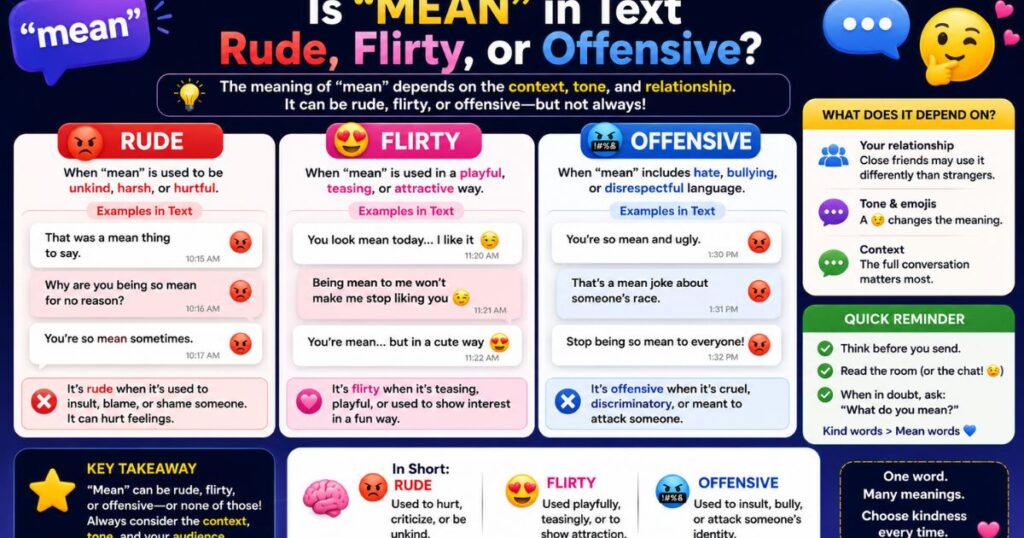
When It Feels Positive
Short, casual replies paired with familiar tone usually feel friendly rather than negative.
When It Feels Negative
Blunt, one-word replies without context can sometimes feel dismissive, especially in emotionally charged conversations.
When It Feels Flirty
Playful punctuation, teasing language, or drawn-out replies often signal flirtation.
When It Feels Offensive
Sarcasm or dismissive phrasing without clear context can occasionally come across as rude, even when unintended.
How to Respond When Someone Says “Mean in Text”
Casual Replies
Match the tone of the original message to keep the conversation natural.
Funny Replies
Light humor, like teasingly asking for clarification, can ease any confusion.
Neutral Replies
A simple, direct response works well when tone is unclear.
Professional Replies
Stick to clear, literal language to avoid misinterpretation in formal settings.
What Does “…” Really Mean in Text From a Guy
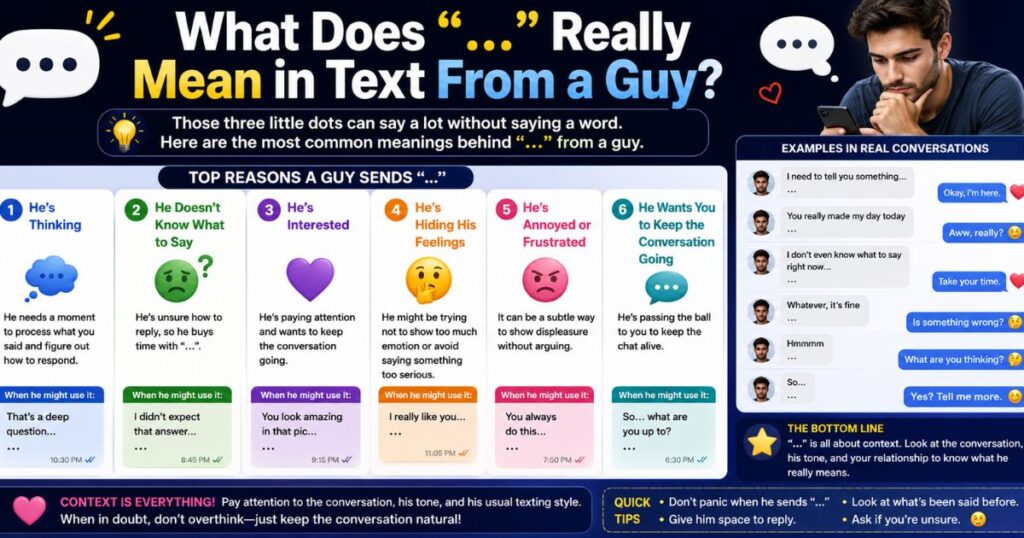
When a guy sends “…”, it often signals hesitation, distraction, or that he is thinking about how to respond, though it can occasionally reflect mild frustration depending on the conversation.
What Does “…” Really Mean in Text From a Girl
Similarly, when a girl uses “…”, it usually reflects uncertainty, a pause in thought, or an emotional reaction, rather than carrying one single fixed meaning.
Common Misunderstandings About “Mean in Text”
Assuming Every Message Has a Hidden Meaning
Not every short or blunt reply carries deeper meaning; sometimes people are simply busy or distracted.
Ignoring Context
Meaning often depends heavily on the conversation leading up to a message, not just the message itself.
Confusing Tone With Intent
A message can sound harsher than intended simply because texting lacks vocal tone.
Assuming Internet Slang Is Universal
Not everyone interprets slang the same way, especially across different age groups or cultures.
Misreading Humor
Sarcasm and jokes can easily be misunderstood without additional context like emojis or follow-up messages.
Similar Slang Terms You Should Know
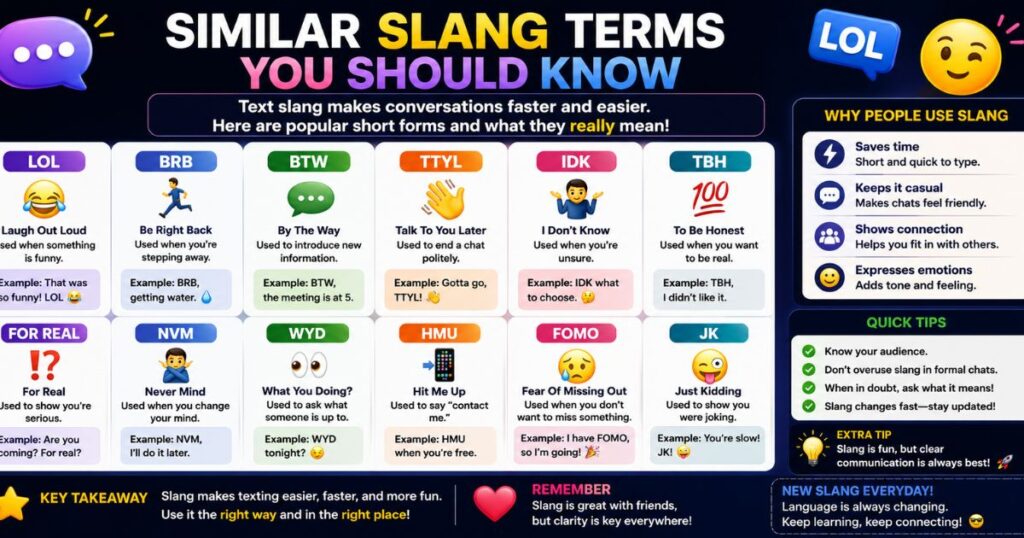
Bet
Used to express agreement, similar to saying “okay” or “sure.”
Cap
Slang for a lie or exaggeration.
No Cap
Used to emphasize honesty, meaning “no lie.”
Ghosting
Suddenly cutting off communication without explanation.
Sus
Short for suspicious, used when something feels off.
Mid
Describes something considered average or unimpressive.
Cooked
Used to describe someone in trouble or facing a difficult situation.
Rizz
Refers to charisma, especially in romantic contexts.
Flex
Showing off or bragging about something.
NPC
Refers to someone acting robotic or lacking individuality, borrowed from gaming terminology.
Lowkey
Used to express something subtly or without much emphasis.
Highkey
The opposite of lowkey, used to express something openly or strongly.
When You Should Avoid Using “Mean in Text”
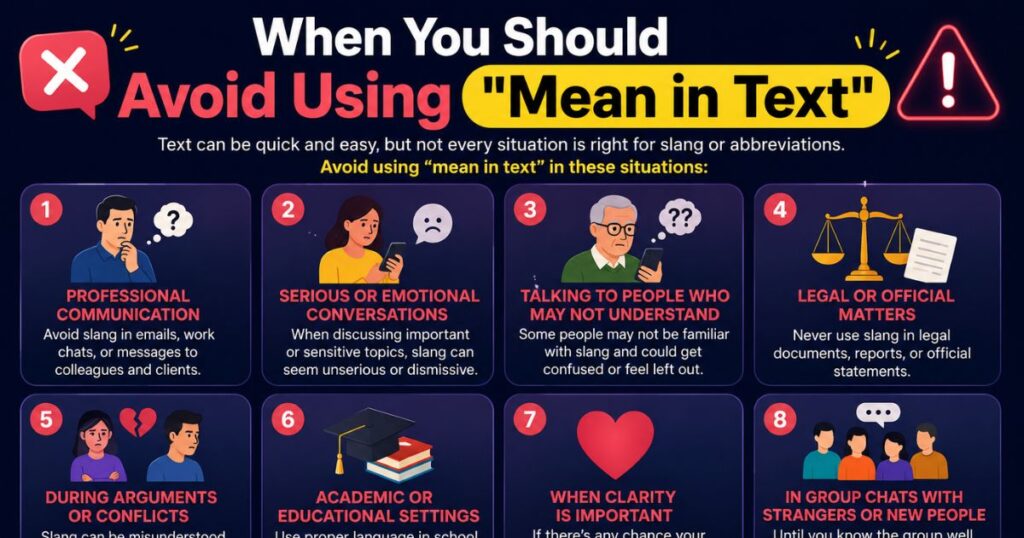
Professional Settings
Avoid relying on symbols or slang in workplace communication to maintain clarity.
Cross-Cultural Chats
Meaning can vary widely across cultures, so simple, direct language works best.
Sensitive Situations
In emotional or serious conversations, clear wording prevents unnecessary misunderstandings.
Academic Communication
Formal writing should avoid slang or ambiguous symbols entirely.
First-Time Conversations
With new contacts, clearer language helps avoid early miscommunication.
Frequently Asked Questions
What does “mean in text” usually refer to?
It typically refers to figuring out the intended meaning behind a word, symbol, or message in texting.
Why do text messages have different meanings?
Because texting lacks tone of voice, meaning often depends on context, punctuation, and platform.
Can a text message have multiple meanings?
Yes, the same message can be interpreted differently depending on relationship and conversation history.
How can I know the real meaning of a text?
Consider the full conversation, sender’s usual tone, and any accompanying emojis or punctuation.
Why is slang so common in texting?
Slang allows faster, more expressive communication suited to quick digital conversations.
Are text meanings the same on every platform?
No, meaning can shift slightly depending on the platform’s culture and typical communication style.
What should I do if I don’t understand a text?
Politely ask for clarification rather than assuming the intended meaning.
Conclusion
Understanding what a text message truly means comes down to context, tone, and platform rather than any single fixed definition.
Whether it is a symbol like “…” or “>>>”, or casual slang shaping a conversation, paying attention to the full picture helps you interpret messages accurately and respond with confidence.