
If you have ever seen “SFS?” pop up in your DMs or comments, it is not a typo or a random string of letters. It is a common social media term that has become part of everyday texting and online interaction, especially among younger users trying to grow their profiles.
This guide explains exactly what SFS means, where it is most commonly used, how it works on Instagram, and when sending one actually makes sense. By the end, you will know exactly what to reply when someone asks you for an SFS.
What Does SFS Mean in Text?
SFS stands for “Shoutout for Shoutout.” It refers to a mutual arrangement where two people or accounts promote each other, usually by posting or sharing content that mentions the other person. The idea is simple: you shout me out, I shout you out back.
SFS is mostly used in a promotional or networking context rather than an emotional one. It is less about personal feelings and more about visibility, growth, and mutual support between social media users or creators.
Where Is SFS Commonly Used?
SFS is most active on visual, follower-driven platforms where growth and exposure matter. It shows up far less on platforms built around private, one-on-one messaging.
- Instagram — the platform most associated with SFS, especially in Stories and comments
- TikTok — used in comment sections asking for shoutout trades
- Snapchat — appears in captions or chat requests between smaller accounts
- Twitter/X — occasionally used to request mutual promotion between accounts
SFS rarely appears in formal writing or professional messaging. It stays firmly within casual, social-media-native conversations, most often between creators, small businesses, or peers trying to grow their following together.
What Is SFS in Instagram?
On Instagram specifically, SFS usually plays out through Stories. One user posts a photo or video of another account with a caption like “SFS with this amazing page,” tagging the other person. The tagged account then does the same in return.
This exchange is common among smaller or newer accounts trying to gain visibility without paid promotion. Larger, established creators use it less often since they already have consistent reach, but it remains one of the simplest organic growth tactics on the platform.
Examples of SFS in Conversation
Seeing SFS used in real messages makes its meaning much clearer.
- “Love your page! Wanna do an SFS?”
- “Just posted your shoutout, can you SFS me back?”
- “SFS with my art account? We have similar followers.”
- “Thanks for the SFS, sending you traffic too!”
In each case, SFS signals a two-way promotional exchange rather than a one-time favor.
When to Use and When Not to Use SFS
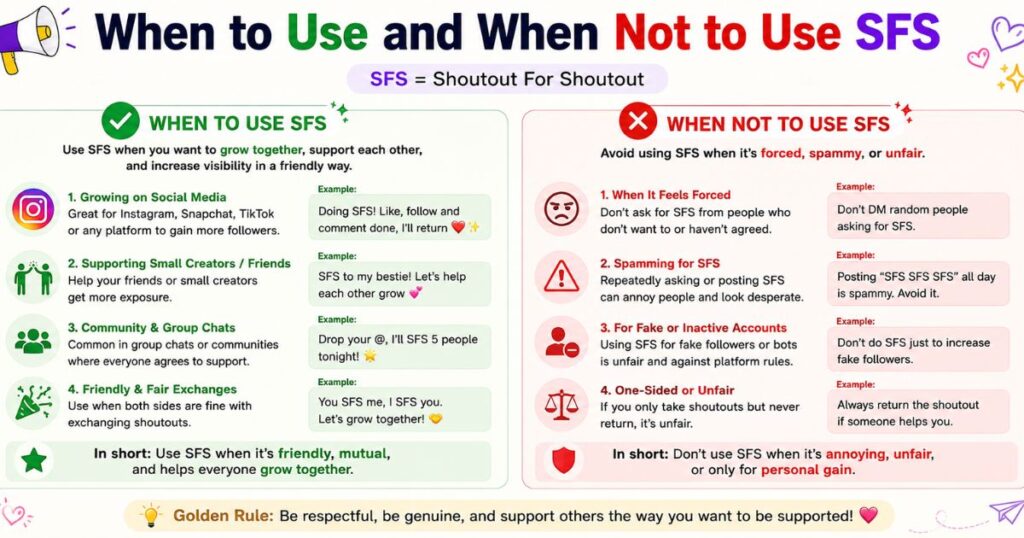
SFS works well in certain situations and feels out of place in others. Understanding the context helps avoid awkward or ineffective requests.
When to Use SFS
- Reaching out to accounts with a similar audience size
- Promoting a small business or creator page
- Building community around a shared niche or interest
- Growing a new account organically without paid ads
When Not to Use SFS
- Messaging someone with a much larger following, since the exchange feels one-sided
- Sending it to accounts unrelated to your niche or content
- Using it repeatedly with the same accounts without real engagement
- Sending it as a cold, generic DM with no personal message
What Does SFS Mean in Text From a Guy?
When a guy sends SFS in a text or DM, it almost always means the same thing as it does for anyone else: a request for mutual promotion. There is generally no romantic or hidden meaning behind it, even if it appears in a casual or friendly tone.
Context matters here, since guys commonly use SFS with gaming accounts, meme pages, or fitness content where cross-promotion is common between similar creators.
What Does SFS Mean From a Girl?
Similarly, when a girl sends SFS, it is almost always a networking request rather than a personal or romantic gesture. It is especially common among beauty, fashion, or lifestyle content creators looking to grow their following through mutual shoutouts.
As with most texting acronyms, gender does not change the core meaning; the surrounding conversation and platform context matter far more than who sent it.
What Does SFS Mean in Text in Urdu?
For Urdu-speaking users on Instagram and TikTok, SFS carries the exact same meaning as it does in English: “Shoutout for Shoutout.” Younger Urdu-speaking social media users often mix English acronyms like SFS directly into Roman Urdu conversations, since terms like this do not have a widely used local translation. A typical message might read, “SFS kar do please,” which simply means “please do a shoutout exchange with me.”
Similar Slang Words or Alternatives
SFS is part of a wider group of social media growth-related acronyms. The table below compares the most common ones.
| Acronym | Full Meaning | Typical Use |
| SFS | Shoutout for Shoutout | Mutual promotion between accounts |
| S4S | Shoutout for Shoutout | Identical meaning, alternate spelling |
| F4F | Follow for Follow | Mutual following exchange |
| L4L | Like for Like | Mutual liking of posts |
| C4C | Comment for Comment | Mutual commenting to boost engagement |
While these acronyms all involve mutual exchange, SFS is specifically tied to promotion and visibility rather than simple likes or follows.
SFS vs S4S: Is There a Difference?
Many users wonder whether SFS and S4S mean different things. The short answer is no; they are simply two ways of writing the same request.
| Feature | SFS | S4S |
| Full Meaning | Shoutout for Shoutout | Shoutout for Shoutout |
| Platform Preference | Instagram, TikTok | Instagram, older Twitter usage |
| Popularity Today | More common | Less common, slightly outdated |
| Meaning Difference | None | None |
The only real difference is stylistic. SFS has become the more widely recognized version in recent years, especially among Gen Z users.
How to Ask for an SFS the Right Way
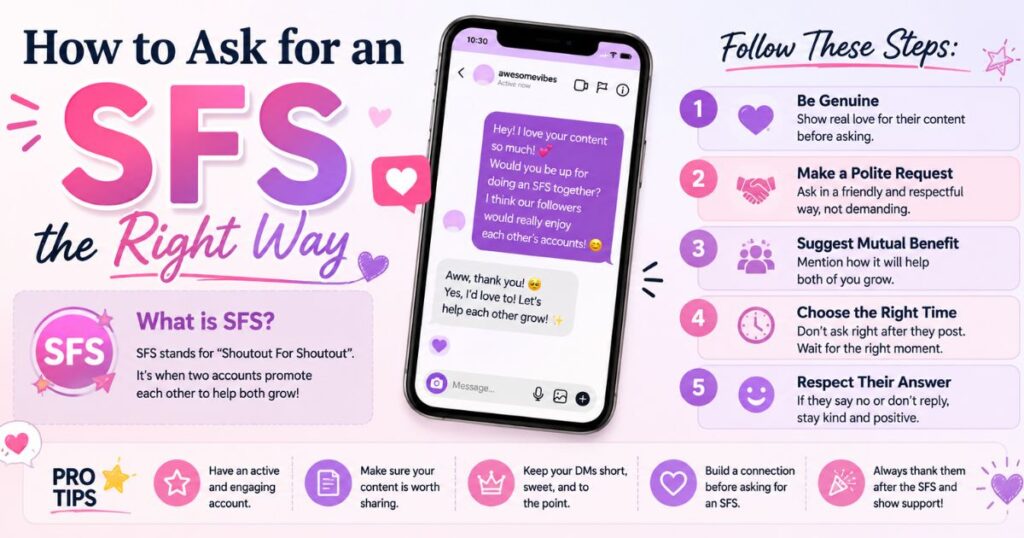
Sending a generic “SFS?” message often gets ignored. A more effective approach usually includes a few key elements:
- Mention something specific about the other account’s content
- Suggest a clear format, such as a Story post or a comment shoutout
- Keep the message short and friendly rather than overly formal
- Follow through promptly once the other person agrees
Common Mistakes People Make With SFS
Even a simple request like SFS can go wrong without the right approach. Common mistakes include:
- Sending it to accounts far larger than your own, expecting equal exchange
- Using copy-paste messages without personalization
- Assuming SFS guarantees real engagement or follower growth
- Forgetting to follow through after the other person posts first
Does SFS Actually Help Grow an Account?
SFS can help with visibility, especially for smaller accounts in similar niches, but it is not a guaranteed growth strategy on its own. Results depend heavily on how closely the audiences overlap and how engaged the other account’s followers actually are.
A well-matched SFS between two active, niche-relevant accounts tends to work far better than one between accounts with little in common.
Frequently Asked Questions
What does SFS mean in text?
SFS means “Shoutout for Shoutout,” a mutual promotion exchange between social media accounts.
What does SFS mean on Instagram specifically?
On Instagram, SFS usually refers to two accounts tagging and promoting each other in Stories.
Is SFS the same as S4S?
Yes, SFS and S4S mean exactly the same thing and are used interchangeably.
Does SFS always involve two similar-sized accounts?
Not always, but it works best when both accounts have comparable audiences and niches.
Can SFS help grow my account?
It can help with visibility, though results depend on audience overlap and engagement quality.
Is SFS only used by influencers?
No, everyday users, small businesses, and casual creators use SFS as well.
What is the difference between SFS and F4F?
SFS focuses on promotional shoutouts, while F4F simply refers to mutual following.
Conclusion
SFS is a simple but widely recognized social media term that means “Shoutout for Shoutout.” Whether used on Instagram, TikTok, or in casual Roman Urdu conversations, it almost always points to a mutual promotion exchange between accounts.
Understanding its meaning, proper etiquette, and realistic limitations makes it much easier to use SFS effectively without wasting time on mismatched or ineffective exchanges.