
POS is one of those short acronyms that carries two completely different meanings depending on where you see it. In casual conversation and comment sections, it usually works as a harsh insult, while in retail and banking it simply refers to a payment system.
This guide breaks down what POS actually means in slang, how the abbreviation shifted from a business term into an online insult, and how the meaning changes depending on the platform or setting. You will also find real examples and closely related slang so you never confuse the two meanings again.
What Does POS Mean?
POS most commonly stands for piece of shit in slang, used as a blunt insult to describe someone seen as worthless, selfish, or generally unpleasant. It is a strong term, often reserved for genuine frustration rather than light teasing.
Outside of slang, POS also stands for point of sale, referring to the location or system where a customer completes a purchase, such as a cash register or checkout terminal. Context almost always makes clear which meaning applies.
Common everyday uses of POS include:
- Calling out someone who treated a friend badly
- Describing a cashier system used at a store checkout
- Reacting to a frustrating news story about someone’s behavior
- Referring to mobile card readers used by small businesses
Origin and History of POS
The insult version of POS has roots in older, blunt English phrases used to describe someone with little regard for others. As texting became popular, shortening the full phrase into three letters made it faster to type during heated conversations.
Online forums and comment sections helped spread the abbreviated slang version widely, since it allowed people to express strong disapproval quickly without spelling out something harsher in full.
The business meaning of POS developed separately and much earlier, tied directly to retail terminology describing the physical or digital point where a sale is finalized.
POS Meaning in Slang
In slang, POS is almost always negative, used to label someone whose actions or character are considered genuinely bad. It shows up frequently in arguments, callout posts, and frustrated replies online.
Unlike lighter insults used jokingly among friends, POS tends to carry real weight. People generally use it when they mean it, not as playful banter.
Signs POS is being used seriously:
- It follows a description of someone’s harmful or selfish behavior
- It appears in longer venting posts rather than quick jokes
- It is rarely followed by laughing emojis or a lighthearted tone
Everyday Situations Where POS Gets Misread
Because POS has two very different meanings, confusion happens more often than people expect, especially in fast typed messages. A retail worker mentioning their POS system can accidentally read as something far more negative out of context.
This mix up usually clears up quickly once the surrounding sentence is read, but it explains why some readers pause before reacting.
Situations where the meaning can get mixed up:
- A retail employee complaining about their POS system acting up
- A customer service post mentioning long POS lines
- A quick comment with no surrounding context
What Does POS Mean on Reddit?
On Reddit, POS almost always refers to the insult meaning rather than the retail term, especially in relationship, advice, or drama focused subreddits. Commenters frequently use it to summarize someone’s bad behavior described in a post.
It often appears at the end of a comment as a short, final judgment after a longer explanation of why someone acted poorly.
POS Meaning in Banking
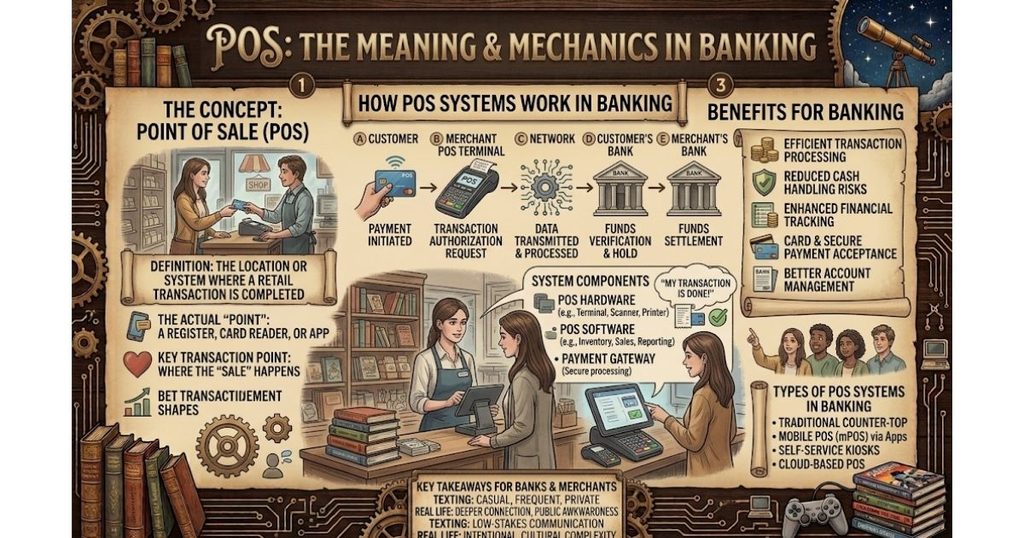
In banking and retail, POS stands for point of sale, referring to the exact moment and system used to process a transaction. This includes physical registers, card machines, and online checkout systems.
Banks and businesses use the term constantly in reports, receipts, and customer service conversations, where it carries no negative connotation at all.
Suggested image alt text: POS meaning in banking point of sale system.
How POS Is Used on Different Platforms
Every platform leans toward a specific meaning depending on its typical content. The table below breaks down common patterns by platform.
| Platform | Common Use of POS |
| TikTok | Calling out bad behavior in comment sections |
| Twitter/X | Reacting to news stories or public drama |
| Comments under posts about relationship issues | |
| Summarizing someone’s behavior in advice threads | |
| Business Sites | Referring strictly to payment and checkout systems |
POS in Texting vs. Real Life
In texting, POS usually appears as a quick reaction to something someone shared, often after a screenshot or a story about a frustrating situation. It works because it delivers a strong opinion in just three letters.
In spoken conversation, people rarely say POS out loud as an acronym, instead spelling out the full phrase if they choose to use it at all.
Key differences between texting and spoken use:
- Texting relies on the acronym for speed and bluntness
- Spoken conversation tends to use the full phrase instead
- Texting rarely explains context, since tone is already clear
- Spoken use is less common overall compared to written slang
Examples of POS in Sentences
Seeing POS in real context makes both meanings much easier to tell apart.
- “He canceled plans last minute again, total POS move.”
- “The store just upgraded their POS system for faster checkout.”
- “Everyone in the comments agreed he was being a POS.”
- “Our POS terminal went down during the lunch rush.”
- “She called her ex a POS after he lied to her friends.”
Variations and Related Slang
POS belongs to a wider group of blunt slang terms used to describe someone’s poor character. Knowing related terms helps clarify the subtle differences between them.
| Slang Term | Meaning |
| POS | Harsh insult for a selfish or bad person |
| Trash | General term for someone acting badly |
| Toxic | Describes harmful or draining behavior |
| Snake | Someone who is deceitful or backstabbing |
| Red flag | A warning sign of bad behavior in someone |
Is POS Safe for Kids?
The insult version of POS references a crude phrase, so it is not considered appropriate for young children, even though only the abbreviation is typed. The retail meaning is completely harmless and appears in everyday business contexts.
Parents should be aware that the acronym can carry a harsh meaning online, so explaining the difference can help kids understand when the term is inappropriate.
When to Use (and Avoid) POS
Knowing when POS fits helps avoid confusion or unintended offense.
Good times to use POS:
- Describing a retail or banking payment system
- Expressing genuine frustration about someone’s harmful behavior
- Discussing the term itself in an educational context
Times to avoid using POS:
- In professional writing where the acronym could be misread
- Around younger audiences unfamiliar with the slang meaning
- When a lighter, less harsh word would fit the situation better
Frequently Asked Questions
What does POS mean in slang?
It usually means piece of shit, a harsh insult for someone seen as a bad person.
Does POS always mean something negative?
No, in retail and banking POS simply means point of sale with no negative meaning.
Is POS a compliment or an insult?
It is an insult when used in slang, never a compliment in that context.
Where did the slang meaning of POS come from?
It shortened an older, blunt English insult phrase for faster use in texting.
Is POS the same as toxic?
They are related, though toxic describes harmful patterns while POS judges overall character.
Is it okay to say POS in front of parents?
The insult meaning is considered crude, so it is best avoided around parents.
How do I know which meaning of POS is being used?
The surrounding sentence almost always makes clear whether it means insult or payment system.
Conclusion
POS carries two very different meanings, working as a harsh slang insult in casual conversation while also standing for point of sale in retail and banking. Context makes the intended meaning clear almost every time.
Understanding how POS shifts between these settings helps you use the term correctly and avoid confusion when reading it online. Whether you come across it in a comment section or on a store receipt, this guide gives you everything you need to read POS the right way.