
You send a thoughtful message. They reply with “ok.” You try again. They come back with “lol.” Nothing more. No energy, no follow-up, no sign of life. Then out of nowhere, they flip it around: “why are you so dry?”
Now you’re the one staring at the screen confused.
“Your dry” (correctly written as you’re dry) is texting slang that means someone sounds boring, low-effort, or uninterested in a conversation. It’s a call-out for flat replies, one-word responses, and zero conversational energy. This guide breaks down every layer of the meaning the signs, the causes, the context, and what to actually do about it.
🧠 What Is the Meaning of Your Dry?
First, a quick grammar note. “Your dry” is technically incorrect. The right phrase is you’re dry short for you are dry. In texting culture, the two get mixed up constantly.
What does “dry” actually mean in this context?
Being dry in texting has nothing to do with water. It means:
- Giving short, lifeless replies
- Not asking questions back
- Showing no emotion or excitement
- Making the conversation feel one-sided
- Sending replies that kill the flow rather than build on it
In short: You’re dry = you sound uninterested or boring in conversation.
It’s closely tied to phrases like dry texting, dry texter, cold reply, one-word responses, and low-energy chat all describing the same frustrating texting pattern.
What Does “Dry” Mean in Texting and Online Chats?
In texting and online chats, dry is an adjective used to describe the quality of someone’s messages. A dry text is one that arrives with minimal effort flat, emotionless, and conversation-stopping.
Classic dry text examples:
- “k”
- “lol”
- “fine”
- “yeah”
- “cool”
- “ok”
These one-word answers aren’t wrong on their own. But when every reply looks like this with no follow-up, no curiosity, and no warmth the conversation dries out completely.
Dry texting meaning in simple terms: It’s technically present but emotionally absent. The person is responding, but they’re not connecting.
📱 Where Is You’re Dry Commonly Used?
“You’re dry” is a phrase built for informal digital spaces. You’ll find it across:
- 📸 Instagram DMs calling out boring replies in direct messages
- 👻 Snapchat reacting to flat streaks or low-energy snaps
- 💬 WhatsApp friends calling each other out in group or private chats
- 🎵 TikTok comments used to describe creators or commenters with no personality
- 💘 Dating apps flagging zero-effort matches who can’t hold a conversation
- 🎮 Gaming chats reacting to teammates with no banter or chat energy
It does not belong in:
- Work emails
- Professional messages
- Formal writing
- Any serious or sensitive conversation
Signs Someone Is Being Dry Over Text
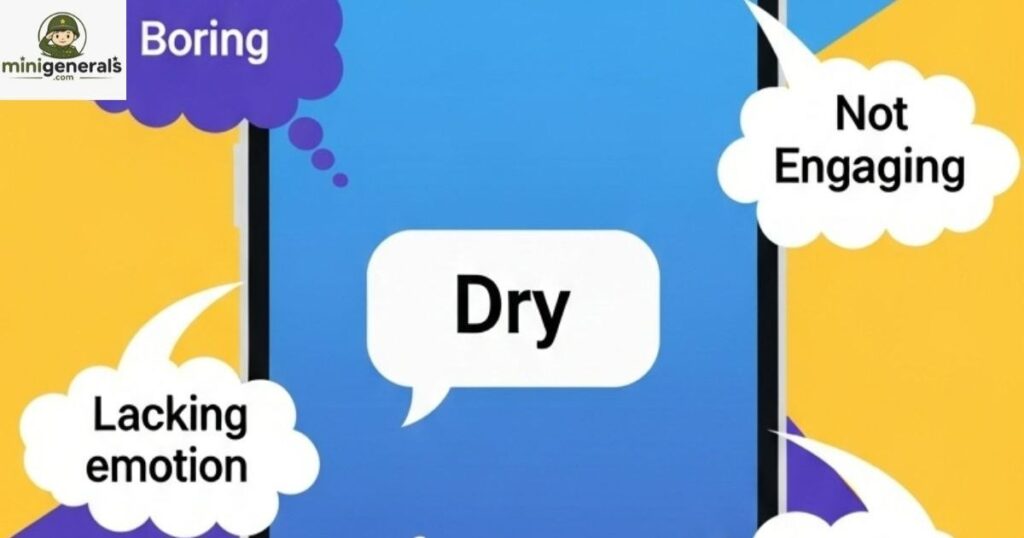
Spotting a dry texter is usually pretty straightforward. The signs show up quickly and consistently:
- One-word replies only “yeah,” “cool,” “ok,” “lol” every single time
- No questions back they never show curiosity about you or the topic
- No emojis or punctuation energy messages feel flat and robotic
- Slow response times takes hours, replies with three letters
- Never initiates always waits for you to start the conversation
- No humor or playfulness completely literal, never jokes around
The key is pattern recognition. One short reply on a busy day means nothing. A consistent wall of minimal responses is a different story entirely.
Why People Send Dry Replies in Conversations
Here’s the part that often gets missed: not all dry texting means the same thing. There are real reasons behind it that have nothing to do with disinterest.
| Reason | What It Usually Looks Like |
| Genuinely busy or distracted | Short replies but warm in-person behavior |
| Introversion or texting style | Always been brief it’s just their normal |
| Emotional overwhelm | Withdrawal from all conversations, not just yours |
| Losing interest | Change from previous engaged behavior |
| Passive conflict avoidance | Cold after a disagreement or hurt feelings |
| Communication style mismatch | They prefer calls, voice notes, or face-to-face |
The most important question to ask is: has something changed? If they used to text with energy and enthusiasm but suddenly shifted to one-word replies, that’s the signal worth paying attention to not the brevity itself.
Dry Text Examples and What They Actually Mean
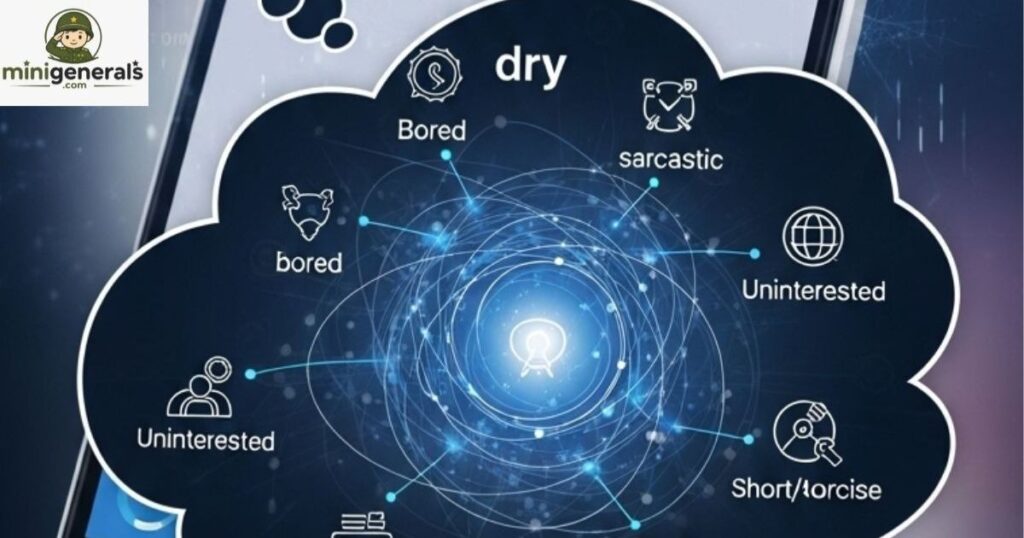
Seeing dry texting in real conversations helps make the meaning click instantly:
Example 1: Friend chat: A: what you doing tonight B: nothing A: why are you so dry 😭
Example 2: Romantic context: A: I missed you today B: ok A: wow you’re dry
Example 3: Keeping the vibe alive: A: tell me about your weekend B: it was fine A: that’s it? stop being dry 😭
Example 4: Flirty tension: A: you looked cute today B: thanks A: that’s all?? don’t be dry 😌
Notice the common thread being called dry usually means not matching someone’s energy. The other person is putting in effort and getting nearly nothing back.
How “Dry” Is Used on TikTok, Snapchat, and Instagram
On social platforms, “dry” and “you’re dry” show up slightly differently depending on the audience:
- TikTok: Creators get called dry in comment sections when their responses to fans feel scripted or cold. “Dry” also describes content with no personality or humor.
- Snapchat: In streaks and DMs, dry snaps (blank photos with no caption, or one-word replies) get called out regularly. A “dry streak” is a common complaint.
- Instagram: Used in DMs to call out flat conversations, and in comments when someone replies to funny content with an emotionless “ok” or “lol.”
On all three platforms, the slang carries the same core meaning low effort, low energy, low engagement.
Difference Between Dry Texting and Losing Interest
This is the question that drives people up the wall at 2 a.m. and the honest answer is: dry texting alone doesn’t confirm disinterest.
Here’s how to actually tell the difference:
| They’re Probably Just a Dry Texter | They’re Probably Losing Interest |
| Warm, engaged in person | Cold both online and offline |
| Still makes plans and shows up | Avoids making plans entirely |
| Has always been brief over text | Clear change from previous behavior |
| Initiates sometimes, even briefly | Never initiates ever |
| Shows up consistently | Responses get slower and fewer |
Bottom line: Dry texting is a red flag when it’s a sudden change combined with reduced in-person effort. If someone has always texted briefly but still shows up, calls, and makes plans that’s a communication style, not a rejection.
Best Ways to Respond to a Dry Texter Without Making It Awkward
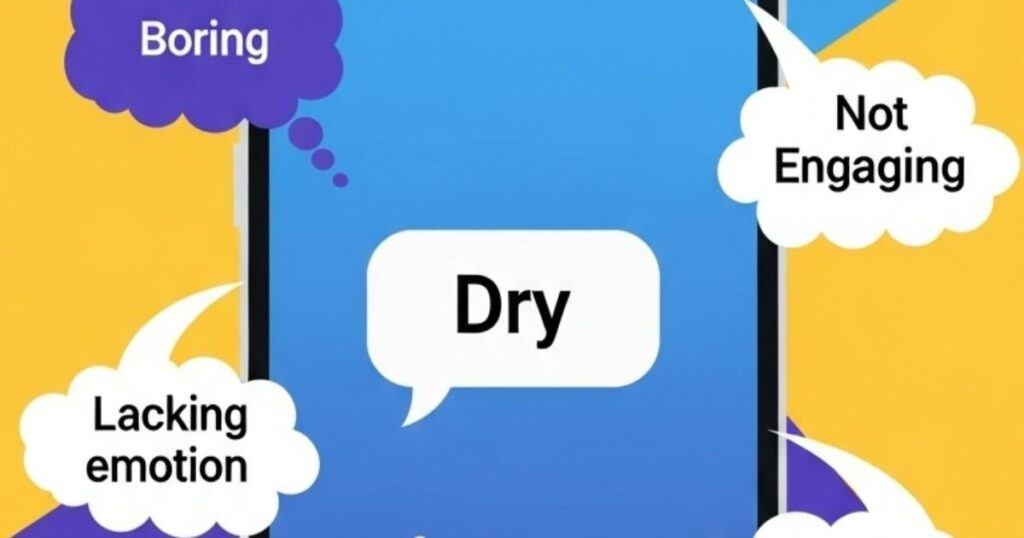
If you’re on the receiving end of dry texts, there are a few smart approaches that keep the conversation moving without making it feel like an interrogation:
- Switch to open-ended questions. Instead of “how was your day?” try “what’s the funniest thing that happened today?” Forces more than a one-word answer.
- Match briefly, then inject energy. Mirror their pace once, then add a funny observation or emoji to shift the tone.
- Call it out playfully. “You’re being dry again 😭 give me something!” Light and fun, not accusatory.
- Suggest moving the conversation offline. “You’re clearly not a texter want to just call instead?” Takes the pressure off both of you.
- Read the pattern. If every message exchange ends in silence and zero effort after you try that itself is the answer.
🕓 When to Use and When Not to Use “You’re Dry”
Like all slang, tone and timing matter enormously.
✅ Use it when:
- You’re with close friends being playful
- It’s clearly a teasing, lighthearted moment
- Both people understand the casual vibe
- You’re flirting with someone who gets the humor
❌ Avoid it when:
- Someone is clearly upset or going through something
- You’re in any professional conversation
- You’ve just met someone and don’t know their style
- It’ll come across as dismissive rather than funny
🔄 Similar Slang Words and Related Terms
| Slang | Meaning | Context |
| Dry texter | Someone who always gives flat, low-effort replies | Texting and dating |
| Left on read | Message was seen but never replied to | All social platforms |
| Ghosting | Suddenly going silent and stopping all contact | Dating and friendships |
| Low effort | Not trying in conversation or relationships | Informal chat |
| Dead chat | A conversation that’s completely stalled | Group chats |
| Cold reply | Emotionless, detached response | Any chat context |
Frequently Asked Questions
Is “your dry” grammatically correct?
No the correct form is you’re dry, meaning you are dry. “Your” shows possession; “you’re” is the contraction used here.
Is calling someone dry an insult?
With close friends it’s usually playful teasing, but in serious conversations it can feel dismissive or rude depending on tone.
What makes someone a dry texter?
Consistently short replies, no follow-up questions, no emojis, and zero effort to keep the conversation alive are the main signs.
Is being dry always a bad thing?
Not necessarily some people naturally prefer brief texts or in-person conversations over digital chat.
Why do people complain about dry texting?
Because texting lacks tone and body language, so short replies easily read as cold or disinterested even when that’s not the intent.
Can dry texting mean they like you?
Yes some people text briefly with everyone including people they genuinely like. Check their in-person behavior for the real answer.
What’s the opposite of dry texting?
Engaged, expressive texting messages that ask questions, show emotion, use humor, and make the other person feel seen and valued.
Final Thoughts on Your Dry Meaning
“Your dry” or more correctly, you’re dry is one of those slang phrases that says a lot in two words. It calls out low energy, flat replies, and conversations that feel like pulling teeth. But like most things in communication, context is everything.
Sometimes dry texting means someone has lost interest. Sometimes it means they’re tired, introverted, or just not a natural texter. The difference matters and reading the full picture, not just the message thread, is what gives you the real answer.
If someone calls you dry, add a little more energy. If someone you’re talking to is being dry, decide whether it’s worth addressing or redirecting. Either way, now you know exactly what it means and that alone puts you ahead of the confusion.