
You are in the middle of a chat, someone says something a little questionable, and the reply comes back: tsk tsk. No long sentence. No explanation. Just two letters and a mood that fills the entire screen. You pause for half a second and wonder whether they are joking, genuinely disappointed, or being playfully flirty with you.
If you have ever spotted TSK on WhatsApp, Snapchat, TikTok comments, or a late-night texting conversation and felt unsure about what it truly meant, you are in exactly the right place. This guide breaks down the TSK meaning in text, its origins, real chat examples, platform usage, similar slang alternatives, and everything you need to use it naturally and confidently in 2026.
TSK Meaning: What Does It Actually Stand For?
In plain English, TSK is not an abbreviation and it has no full form. It does not stand for anything the way LOL stands for laughing out loud or OMG stands for oh my God. Instead, TSK is an onomatopoeic expression, a word that represents a physical sound rather than a set of actual words.
Specifically, TSK represents the quick clicking sound made by pressing the tongue against the roof of the mouth and releasing it sharply. In spoken conversation, people have made this sound for centuries as a nonverbal reaction to something disappointing, foolish, or mildly irritating. When digital communication arrived and full sentences became too slow, that tongue-click became text.
TSK signals that something feels:
- Mildly disappointing or careless
- Worthy of gentle teasing or scolding
- Surprising in a low-key, unimpressed way
- Slightly annoying but not seriously upsetting
- Playfully judged rather than harshly criticized
Example in context: “You forgot my birthday again? tsk 😒”
Here TSK adds light disappointment without aggression. It says everything without needing a paragraph. That is the complete tsk meaning in text, chat, slang, and digital communication explained simply.
Where Is TSK Commonly Used?
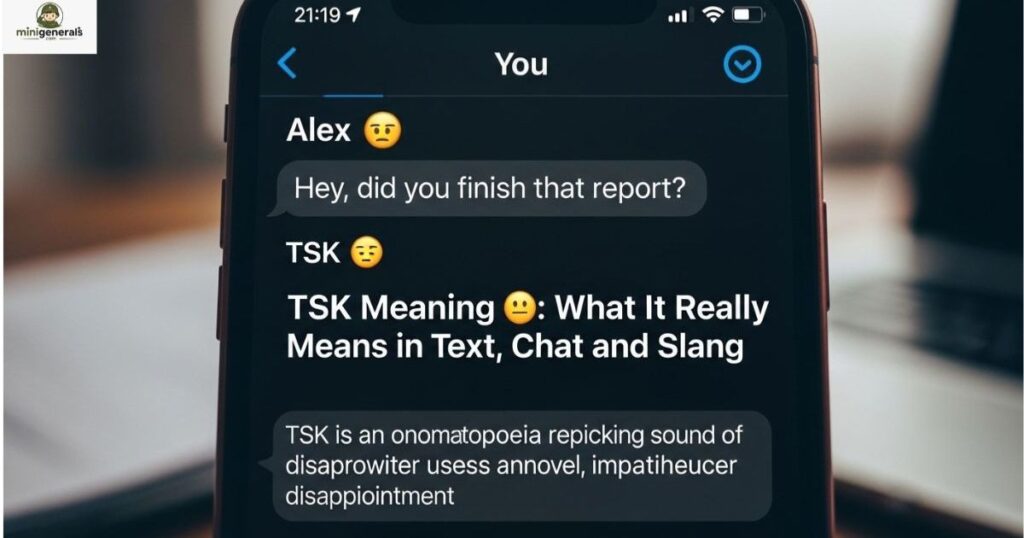
TSK meaning in chat appears almost exclusively in informal digital spaces where emotional tone and speed matter more than grammar or formality. It thrives wherever reactions happen fast and people express feelings in the shortest possible way.
Most common platforms for TSK:
- 💬 WhatsApp messages and group chats between friends
- 📸 Instagram DMs and comment threads on funny or surprising posts
- 🎵 TikTok video comments reacting to cringe or unexpected moments
- 👻 Snapchat streak conversations and quick replies
- 🎮 Gaming chats and Discord servers during intense or silly moments
- 🧵 Twitter or X threads reacting to controversial or funny posts
- 💬 Facebook comments where older millennials also commonly use it
Tone profile of TSK:
- Casual and expressive without being aggressive
- Social media friendly and quick to deliver
- Not formal or professional in any setting
- Perfectly suited to Gen Z and millennial texting style
Whether you are looking up tsk meaning in text from a guy or tsk meaning in chat from a girl, the core meaning stays consistent. Only the emotional flavor shifts depending on relationship, context, and the emoji paired with it.
Examples of TSK in Real Conversations
Seeing TSK meaning slang in action through real examples is the clearest way to understand the emotional range it covers. The same two letters can feel playful, sarcastic, sympathetic, or flirty depending entirely on context.
1. Playful disappointment A: I finished the whole series without you B: tsk tsk fake friend 😭
2. Light sarcasm A: I slept at 4am again last night B: tsk no self control at all
3. Teasing a friend A: I lost in the very first round B: tsk that was quick 😂
4. Flirty tone A: You didn’t even miss me a little? B: tsk tsk you noticed 😉
5. Genuine sympathy A: My phone fell into the sink B: tsk that actually hurts
6. Classic disapproval A: I told you not to do that B: tsk tsk you never ever listen 🙄
In each case the two letters carry a completely different emotional weight. Emojis, punctuation, and the surrounding conversation are what transform TSK from judgment into affection or from disappointment into teasing. Tone is everything with this expression.
When to Use and When Not to Use TSK
Knowing when TSK fits naturally is just as important as knowing what it means. Dropped into the wrong setting, it can read as passive-aggressive or unprofessional even though that is rarely the intention.
✅ When TSK works perfectly:
- Casual texting with friends who know your humor
- Playful arguments where teasing is welcome
- Reacting to silly mistakes in a lighthearted way
- Flirty conversations where a little light judgment adds charm
- Social media comments on funny, surprising, or cringe content
❌ When TSK should be avoided:
- Work emails and professional Slack or Teams channels
- Conversations with people you do not know well yet
- Serious emotional discussions or apologies
- Formal customer service or academic communication
- Any setting where the recipient may not understand digital slang
Context Comparison Table
| Context | Example Message | Why It Works or Not |
| Friend chat | tsk you did it again 😄 | Casual, warm, and fun between close friends |
| Flirty texting | tsk tsk look who noticed 😏 | Playful and light without being confrontational |
| Gaming Discord | tsk that was such a bad move | Fits the fast, expressive culture of gaming chats |
| Work Slack | Please double-check this document | Professional tone without informal slang |
| Formal email | Kindly review the attached file | Polite, clear, and context-appropriate |
| Instagram comment | tsk did nobody catch that mistake | Quick informal reaction to content |
🔄 Similar Slang Words and Alternatives to TSK
TSK belongs to a broader family of short emotional reactions that digital communicators use when a full sentence feels like too much effort. Here is how it compares to its closest relatives:
| Slang | Meaning | Tone Compared to TSK |
| SMH | Shaking my head | More direct disappointment, slightly stronger |
| Ugh | Annoyance or frustration | More openly irritated, less playful |
| Sigh | Tired, dramatic, or resigned | More theatrical than TSK |
| Meh | Indifference or low interest | Less judgment, more detachment |
| Tut tut | British English version of TSK | Same meaning, different regional flavor |
| 🙄 | Visual eye-roll reaction | Works like TSK but visual instead of written |
All of these live in the same emotional neighborhood as tsk meaning slang. They are short, fast, emotionally expressive reactions that replace long explanations with instant feeling. TSK stands out because it is subtler than most, landing somewhere between disapproval and affection depending on the moment.
TSK Meaning in English and Online Culture
From a language perspective, TSK is technically an interjection. Merriam-Webster defines tsk-tsk as an expression used to indicate disapproval of something. It is classified as an onomatopoeic word, one that imitates a real sound rather than carrying its own literal meaning.
That linguistic history explains why TSK behaves differently from other internet slang. Where LOL or WTF are purely digital inventions, TSK has roots in actual human speech that go back centuries. Parents used it with children. Teachers used it in classrooms. It appeared in novels and stage directions long before smartphones existed.
When digital communication arrived and emotional nuance was stripped from text, TSK traveled from mouth to keyboard naturally. Its versatility is what kept it alive across generations:
- It can be funny or serious depending on the emoji paired with it
- It can read as caring or judgmental based on the relationship
- It can be one letter repeated three times for dramatic escalation: tsk tsk tsk
- It crosses generational and even some language barriers because the tongue-click sound exists in many cultures worldwide
On Urban Dictionary and similar slang references, TSK is consistently described as a quick emotional reaction to disappointment or mild annoyance, aligning with real-world usage across every major platform today.
The History and Origin of TSK in Digital Communication
TSK did not begin as internet slang. Its story starts much earlier in the history of human nonverbal communication. The tongue-click that TSK represents has been used across cultures for centuries as a universal reaction to something disappointing, foolish, or mildly wrong.
In written English, tsk first appeared in literature and theatrical scripts as a way for authors to show a character reacting emotionally without using dialogue. A line like “tsk, child, you should know better” communicated both sound and attitude in just a few characters, long before digital communication existed.
When texting began in the early 2000s and SMS character limits made emotional nuance expensive, people borrowed familiar spoken sounds and typed them directly. TSK was a natural fit. It was short, immediately recognizable, and already emotionally loaded with clear meaning. As platforms like WhatsApp, Instagram, and eventually TikTok grew, TSK traveled with the users who had always used it in speech.
Today it functions as what some language experts call emotional punctuation in digital speech. It does not add information to a message. It adds tone. And in a world where text strips away facial expressions and vocal inflection, tone is everything.
Why You Will Keep Seeing TSK Everywhere
Modern texting culture runs on speed and emotion. Saying “I am slightly disappointed in you but only in a joking way and I still like you” takes effort and time that most conversations do not allow. Typing tsk tsk takes under a second and communicates exactly the same feeling.
That is the core reason TSK has survived from spoken language through chatroom culture, SMS, social media, and now short-form video content. It solves a real communication problem: how do you express a nuanced emotional reaction quickly, casually, and without escalating the mood?
Key reasons TSK keeps appearing everywhere:
- It is genuinely fast to type with no autocorrect interference
- It carries enough emotional information to replace a full sentence
- It feels human and conversational rather than robotic
- It pairs naturally with emojis that clarify the exact tone intended
- It works equally well in playful, flirty, sympathetic, and mildly annoyed contexts
- Gen Z has adopted it not just sincerely but ironically and comedically in meme culture
Once you understand how TSK works in context, you will start noticing it constantly in the digital conversations around you and using it naturally without overthinking it.
How TSK Looks Different Across Generations and Audiences
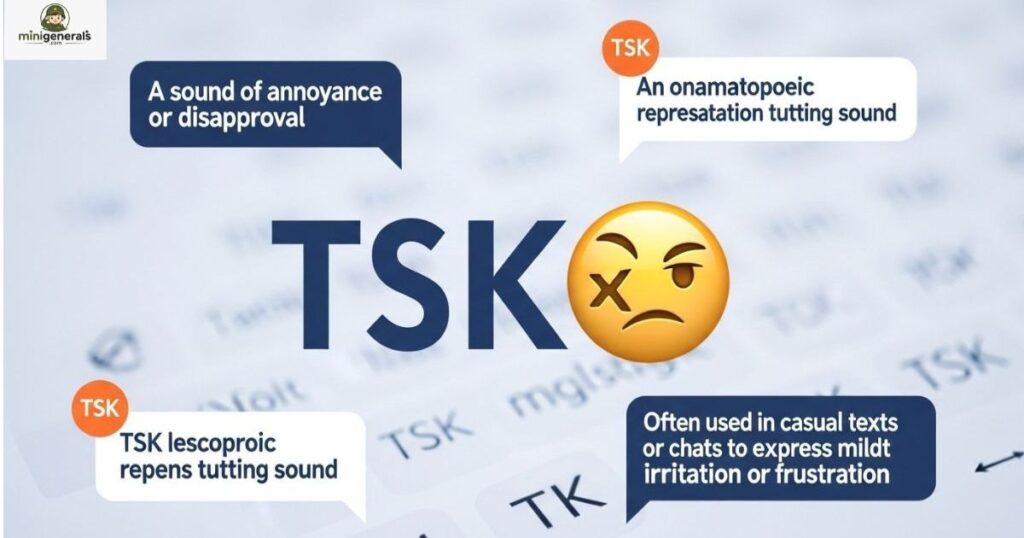
TSK is one of those rare slang expressions that crosses generational lines, though how each group uses it varies in meaningful ways.
Gen Z users often deploy TSK ironically and humorously, pairing it with exaggerated emojis like 💀 or 😭 to signal that the disappointment is entirely comedic. It shows up in meme captions, video comment sections, and reply threads where performative judgment is part of the entertainment.
Millennials tend to use TSK more directly in actual conversational contexts, as a genuine light reprimand or affectionate scolding between people who know each other well.
Olde generations who grew up making the tongue-click sound in real life often recognize and use TSK naturally in texting, sometimes without even realizing it has become formal internet slang.
For children and younger teens, TSK is generally considered safe and appropriate since it contains no profanity and carries no explicit meaning. However, understanding the emotional context is important so young users do not accidentally come across as rude when they mean to be playful.
Frequently Asked Qutions
What does TSK mean in text?
TSK represents a tongue-click sound expressing mild disappointment, playful disapproval, or teasing annoyance in casual digital conversations.
What does TSK TSK mean in chat?
Repeating it as TSK TSK intensifies the reaction, making it feel more dramatic, more theatrical, or more seriously disapproving depending on tone.
Is TSK considered rude?
Not usually. Among friends it almost always reads as playful, though in unfamiliar or tense situations it can land as passive-aggressive or judgmental.
What does TSK mean on WhatsApp?
Exactly the same as anywhere else: a casual, emotionally expressive reaction to something mildly disappointing or worth gently teasing someone about.
Can TSK be used in a flirty way?
Yes, absolutely. When paired with a winking emoji or used in a playful back-and-forth, TSK can carry a clearly flirtatious and teasing tone.
Does TSK have a full form or acronym meaning?
No. TSK is not an abbreviation for any phrase. It is a written representation of the actual clicking sound humans make to express disapproval or mild frustration.
How should you respond when someone sends you TSK?
Match their energy. If it feels playful, respond with humor. If it seems genuinely disappointed, acknowledge it briefly. If you are unsure, asking for clarification is always the smart move.
Final Thoughts
TSK is one of those beautifully simple expressions that packs an entire emotional conversation into three letters or fewer. It is not angry. It is not formal. It is the written equivalent of a knowing look, a raised eyebrow, or the small disapproving sound someone makes when they want to react without making a big deal out of something.
The next time someone sends you tsk in a message, you now know it means they are reacting, not attacking. They are expressing a feeling quickly, casually, and in the most human way digital communication allows. Used well, TSK adds personality, warmth, and emotional depth to conversations that plain text alone cannot always deliver.
Understand the tone, read the context, check the emoji, and you will never be confused by TSK again.